Clinical practice
The life behind the book
Dr. Ishwar
Gilada
Dr. Ishwar Gilada is an Indian HIV clinician and public-health advocate whose work has brought medicine, dignity, communication, and human rights into the same conversation. He raised an early public alarm about AIDS in India in 1985 and helped establish an HIV/AIDS clinic at Mumbai's JJ Hospital in 1986.
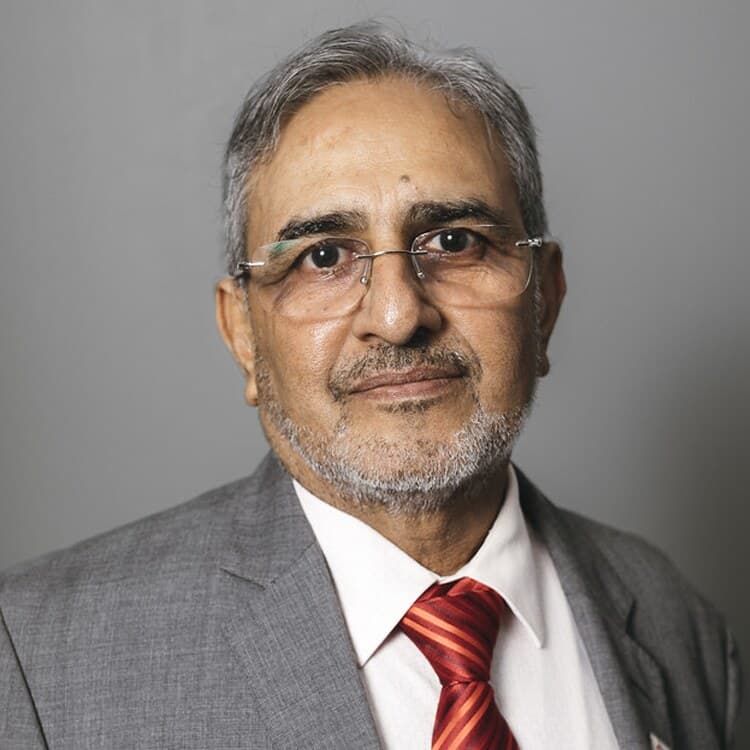
Biography
A career built where medicine meets human dignity.
Dr. Gilada’s story moves through hospitals, community programmes, policy rooms, professional forums, and public campaigns. The common thread is not a single disease; it is the conviction that care fails when it cannot reach the language and reality of a person’s life.
- Raised an early public alarm about AIDS in India in 1985; helped establish an HIV/AIDS clinic at JJ Hospital in 1986
- Founder and continuing leader of People’s Health Organisation and Unison Medicare and Research Centre
- President Emeritus, AIDS Society of India; International AIDS Society Governing Council member for Asia and the Pacific
- Contributor to India’s 2021 National Guidelines for HIV Care and Treatment
Present tense
The work did not end when the book was written.
Three connected areas describe Dr. Gilada’s current professional focus.
Professional leadership
Connecting Indian experience with global health
His current public-health work includes professional leadership as President Emeritus of the AIDS Society of India and service on the International AIDS Society Governing Council for Asia and the Pacific.Policy, teaching, and public conversation
Keeping medicine legible outside the clinic
He continues to contribute to policy, professional education, and public conversations about treatment, stigma, sexuality, rights, and the language through which health information reaches people.Selected timeline
Four decades, seen through turning points.
A concise public record behind the perspective carried through the book.
Care where systems were absent
Early community-health work brought care and practical health communication to people public institutions often overlooked.
A warning, then a clinic
He raised an early public alarm about AIDS in India, then helped establish an HIV/AIDS clinic at JJ Hospital in Mumbai.
Law, blood safety, and dignity
His work joined public-health advocacy with the fight against discrimination toward people living with HIV.
Community-led prevention
The Saheli model placed peer leadership and lived experience at the centre of prevention and care.
From local work to global health
The work continues through professional leadership, policy engagement, teaching, and a long view of public health.
Mumbai, 1990
The condom microphone
Before public health had a script for talking to a stadium crowd about safe sex, he improvised one: a condom, unrolled over a microphone, in front of thousands. It was undignified by the standards of the room. It worked by the standards of the street.
Continue through the record